








Picking between plan tiers often comes down to team size and how much automation a business wants from day one. A Nextiva tiers comparison between NEXT Core and Enterprise shows where basic phone and messaging tools stop and a fuller, AI-assisted conversation platform takes over. Both plans run on the same NEXT platform, yet the scope of channels, integrations, and AI handling differs between them. Looking closely at those differences helps clarify which plan is designed to handle which kind of workload.
NEXT Core: Essential Features for Small Teams
NEXT Core is built for small teams that need dependable phone and messaging tools without a long setup process. Nextiva includes unlimited calling along with team messaging in this plan, so staff can coordinate internally while handling customer calls on the same system. Voicemail transcription and a single inbox for customer emails are part of the package, consolidating conversations that might otherwise scatter across separate apps.
This plan covers what many small offices rely on daily: phone, texting, and messaging in one system rather than several disconnected tools. XBert AI is available on NEXT Core as an add-on billed per conversation, which means smaller teams can test automated conversation handling without folding it into the base subscription. That structure gives offices with lighter call volumes a lower-commitment way to see whether automated handling fits daily operations before expanding its use.
Enterprise Plan: Advanced Capabilities for Larger Operations

The Enterprise plan extends the same communication foundation but targets organizations managing a higher volume of conversations across more channels. It keeps the phone and texting core, video meetings, and voicemail transcription found in NEXT Core, while adding broader integration options for teams that depend on tools like Microsoft Outlook, Google Workspace, and HubSpot. Connecting those platforms directly to a single conversation system is the detail that most separates Enterprise from NEXT Core, since it lets information entered in one tool show up in another without someone retyping it. In general, having to re-enter the same customer detail across separate systems is a common source of mismatched records in growing organizations, and tighter integration is one way teams try to reduce that friction.
Where NEXT Core focuses on getting a small team running quickly, Enterprise is built around coordination across departments. Reporting and insight tools come with this plan, giving managers visibility into call volume, response times, and team activity. For companies juggling multiple locations or larger support queues, the added administrative and reporting capability sits mainly in this plan, which is the clearest sign of what Enterprise is designed to handle compared with NEXT Core.
- NEXT Core includes unlimited calling and team messaging for small teams, while Enterprise extends the same communication core to organizations handling higher call volumes.
- XBert AI appears on NEXT Core as a per-conversation add-on, while Enterprise materials emphasize expanded integration options as its main differentiator.
- Both plans include a unified email inbox and voicemail transcription, but only Enterprise adds reporting and insight tools built for managers overseeing larger teams.
- NEXT Core connects phone, texting, and messaging in a single system, while Enterprise layers in integrations with Microsoft Outlook, Google Workspace, and HubSpot.
XBert AI Availability Across Nextiva Tiers

XBert AI is the artificial intelligence agent built into the NEXT platform, handling tasks like appointment scheduling, FAQ resolution, and call summarization. On NEXT Core, that capability is listed as a per-conversation add-on rather than included outright in the base subscription, a distinction worth noting in any Nextiva tiers comparison since it changes how predictable the cost of automation feels against a flat plan fee. Enterprise materials, by contrast, focus more on integration breadth and manager-facing reporting than on a separate per-conversation AI charge, which suggests the two plans frame automated handling differently rather than offering it on identical terms.
That framing matters for a Nextiva tiers comparison because it shapes how a business plans for automated conversation handling going forward. Teams expecting frequent inquiries outside standard hours may lean more heavily on that AI layer, while teams with lighter call volumes might treat it as an occasional add-on instead of a core dependency.
Conversation Channels and Integration Scope by Plan
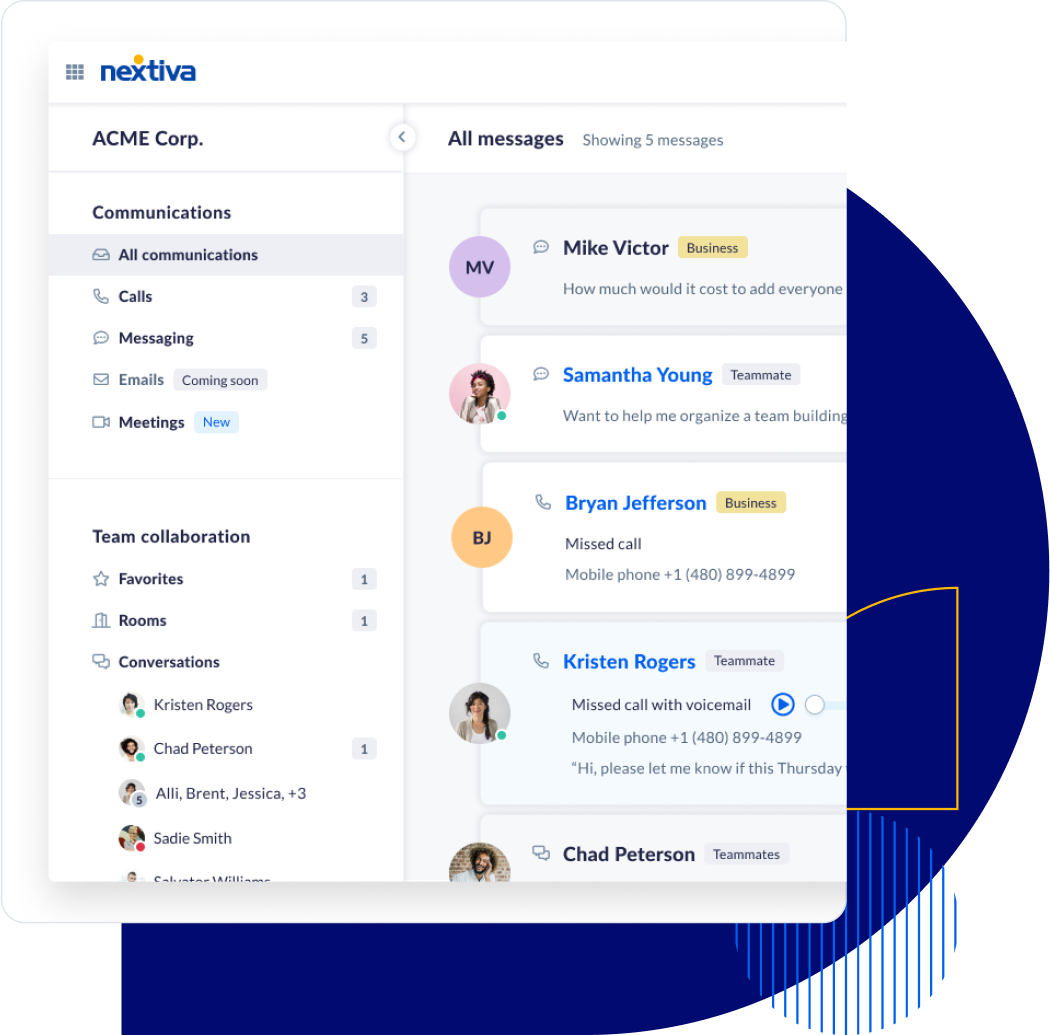
Nextiva organizes its communication tools around what it calls conversation channels, covering voice, video, chat, email, and social messaging from a single interface. Every plan includes phone and texting, voicemail with transcription, a unified email inbox, and team messaging with channels and threads. The difference between NEXT Core and Enterprise shows up less in which channels exist and more in how many outside tools connect to them.
Enterprise expands that integration scope with connections to platforms like Microsoft Outlook, Google Workspace, and HubSpot, letting larger teams fold existing workflows into one system instead of replacing them. NEXT Core keeps its channel set intentionally compact, matching the needs of smaller teams that do not require as many outside connections. This is a central part of any Nextiva tiers comparison, since integration scope often matters more than raw channel count once a team grows.
Support, Uptime, and Infrastructure Across Tiers

Both NEXT Core and Enterprise draw on the same underlying communication network, so reliability is not the factor that separates the two plans. What changes between them is feature scope, meaning which integrations are included, how reporting is handled, and how XBert AI is billed. A Nextiva tiers comparison ultimately comes down to matching channel needs, integration requirements, and AI usage patterns with the right plan.
Teams evaluating the two can weigh team size, expected call volume, and reliance on automated handling before deciding which plan fits daily operations better. For a smaller office, NEXT Core covers the core conversation tools without added complexity. For an operation managing multiple departments or locations, Enterprise adds the reporting and integration depth that larger workflows tend to need.
Either plan keeps a business connected through one system, with the real choice shaped by how much integration and automation that business expects to use.