









In the early 1990s, NVIDIA was a scrappy startup focused on a singular, niche mission: making video games look better. By April 2026, that mission has evolved into something far more profound. NVIDIA has officially transcended its hardware origins to become the indispensable “Operating System” for the global economy. With a market capitalization holding steady around $4.4 trillion, NVIDIA has transitioned into a full-stack platform company, powering everything from national “Sovereign AI” clouds to the autonomous humanoid robots now walking factory floors.
The brand’s identity is no longer tied solely to the graphics cards found in gaming rigs. Instead, it is defined by a massive, interconnected ecosystem of silicon, software, and simulation. NVIDIA is the architect of the infrastructure that makes intelligence both digital and physical as ubiquitous and accessible as electricity.
The Strategic Shift to an Annual Cadence

The defining characteristic of NVIDIA’s dominance in 2026 is its relentless release schedule. By moving from a biennial to a strict annual product cycle, the company has made it nearly impossible for competitors to close the performance gap. While the Blackwell architecture (B200/GB200) currently powers the world’s most advanced data centers, the industry has already shifted its gaze to the newly unveiled Vera Rubin platform.
Named after the pioneering astronomer who provided evidence for dark matter, the Rubin architecture represents a total system overhaul rather than a simple chip upgrade. It features the new Vera CPU NVIDIA’s first fully custom Arm-based processor designed solely for the orchestration of AI workloads and the Rubin GPU, which utilizes the latest high-bandwidth HBM4 memory.
This platform is specifically engineered for what NVIDIA calls Agentic AI. Unlike the chatbots of the past that simply predicted the next word in a sentence, Agentic AI systems are designed to reason, plan, and execute multi-step tasks autonomously. By optimizing the hardware specifically for these complex “reasoning loops,” the Rubin platform promises to slash the cost of AI inference by up to 10x, making it commercially viable for every business to deploy thousands of autonomous digital workers.
Physical AI and the Industrial Metaverse

NVIDIA’s most significant expansion over the last two years has been into the realm of Physical AI. This represents the “second wave” of the AI revolution: moving intelligence from screens into the physical world. Through the NVIDIA Omniverse platform, the company is enabling a future where every physical object, from a single bolt to an entire continent-spanning supply chain, has a digital twin.
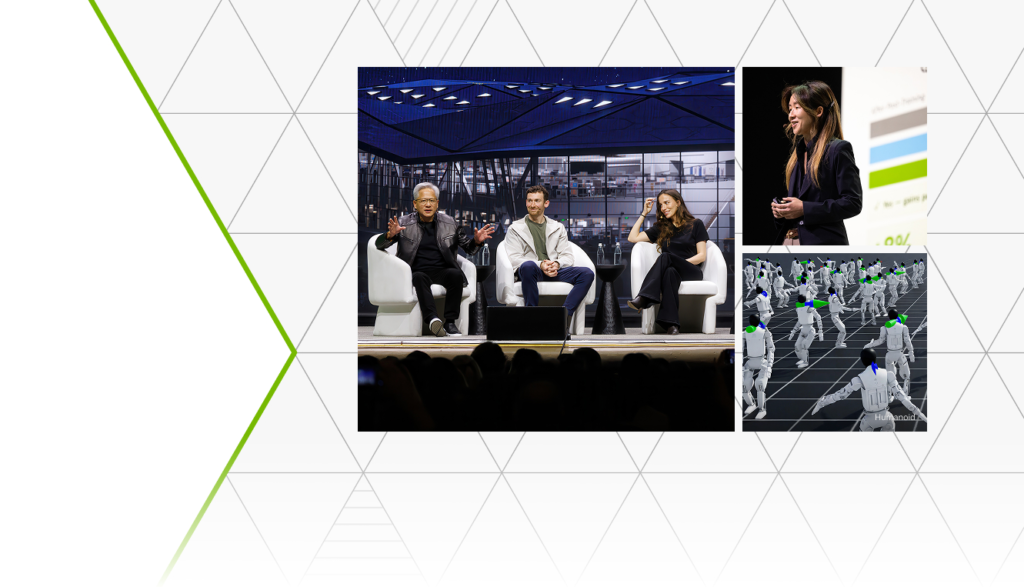
This isn’t just about high-end 3D modeling; it’s about creating a “Data Factory” for the physical world. In these photorealistic, physics-accurate virtual environments, robots are trained through millions of iterations in a fraction of the time it would take in reality. Using the Isaac GR00T foundation model, developers are now training humanoid and surgical robots to perform complex tasks simply by observing human demonstrations in these virtual spaces.
This “sim-to-real” pipeline has become the new blueprint for modern manufacturing. Industrial leaders like ABB, Teradyne, and Amazon Robotics have now standardized on NVIDIA’s robotics stack. They use it to validate production lines virtually before a single physical robot is ever bolted to a factory floor. This drastically reduces the risk of deployment and allows for a level of automation that was considered science fiction only a few years ago.
Sovereign AI: The New National Infrastructure

Data has officially become the “new oil,” and nations have realized that AI infrastructure is a fundamental pillar of national security and economic sovereignty. NVIDIA has capitalized on this global shift by leading the Sovereign AI movement. The company has moved beyond selling to private enterprises, now acting as a strategic partner to governments in Japan, Saudi Arabia, France, and Canada.
The goal for these nations is to build domestic AI clouds that reflect their unique cultural values and languages. By utilizing NVIDIA NIM (Inference Microservices), these governments can deploy large language models like the Nemotron family on local soil. This ensures that sensitive national data ranging from healthcare records to legal precedents remains within their own borders and under their own control. This shift has effectively turned NVIDIA into a provider of “national intelligence” layers, helping countries build the digital foundations for their future economies.
The Automotive Revolution: From Cockpits to Autonomy
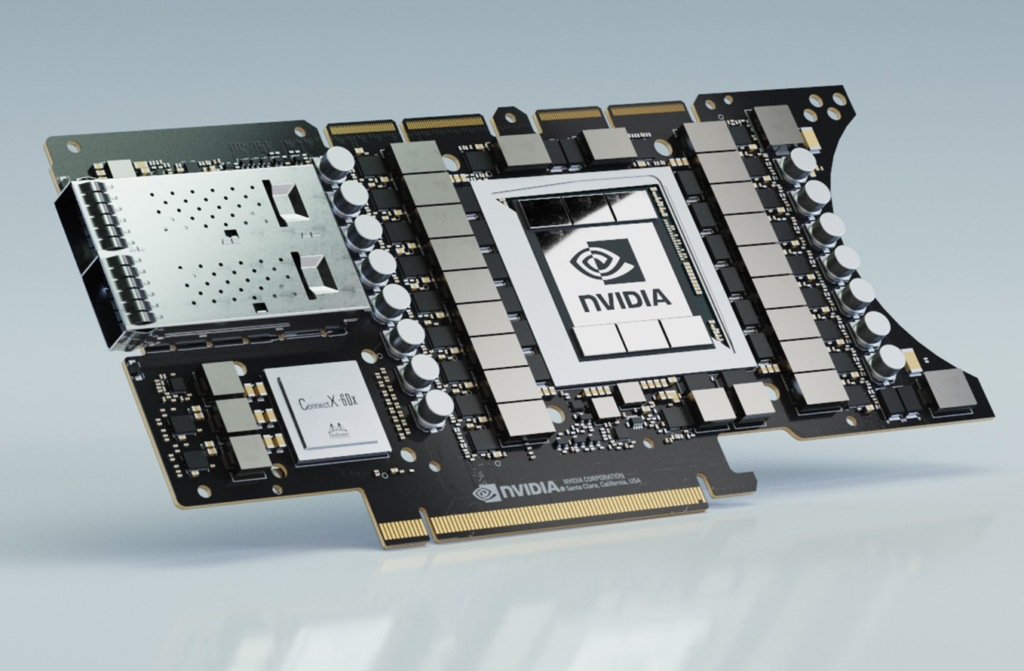
NVIDIA’s influence has also fundamentally reshaped the automotive industry. The NVIDIA DRIVE Thor platform has become the centralized brain for the next generation of vehicles. We have moved past the era where cars had dozens of small computers managing individual functions. Today, a single DRIVE Thor chip manages everything: the infotainment system, the digital mirrors, and, most importantly, Level 4 autonomous driving.
Uber announced a massive expansion of its autonomous fleet using NVIDIA’s full-stack technology. These vehicles use “reasoning-based” autonomy, which allows them to solve complex, unpredictable traffic scenarios what engineers call “long-tail” events with human-like judgment. By moving away from rigid, code-based rules and toward AI-driven reasoning, NVIDIA has made self-driving technology safer and more adaptable to the chaotic streets of major global cities.
The Ecosystem Moat: CUDA and the Software Layer
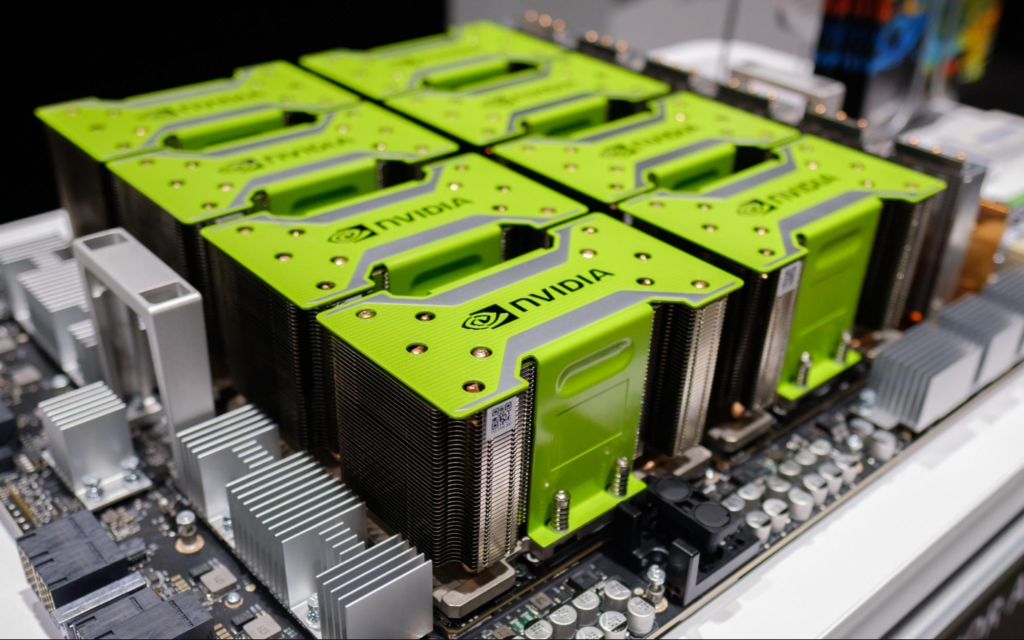
While the hardware often gets the headlines, NVIDIA’s true dominance lies in its massive software moat. Over the last decade, the company has invested billions into CUDA, its parallel computing platform, and more recently, into NVIDIA AI Enterprise. This software layer ensures that once a developer builds on NVIDIA, they stay on NVIDIA.
The recent launch of NemoClaw exemplifies this strategy. It is a security-first framework designed to run “Agentic AI” safely within corporate environments. As businesses move from simple internal search tools to autonomous agents that can manage supply chains, book corporate travel, and conduct financial audits, NVIDIA provides the underlying security, orchestration, and monitoring tools to make it possible. This transition from a hardware vendor to a recurring-revenue software partner is what has solidified NVIDIA’s long-term financial stability.
The Architect of a New Age
NVIDIA is no longer just a “chip company.” It is the architect of the infrastructure that will define the next century of human progress. From “AI Factories” that utilize liquid cooling to stabilize global energy grids to DRIVE Thor platforms that power the world’s transportation, NVIDIA’s influence is now woven into the fabric of every major industry.
Intelligence is the most valuable commodity, and NVIDIA is the company that produces the “engines” that generate it. By combining the power of the Vera Rubin platform with the boundless simulation capabilities of Omniverse, NVIDIA doesn’t just build the tools for the future it provides the very intelligence that makes that future work.